


by News Reporter January 12th, 2026
A Family Office Perspective on Canadian Farmland in 2026
Family offices are rethinking their portfolios. Again.
The usual suspects—private equity, hedge funds, venture capital – are all getting more expensive and more crowded. Meanwhile, Canadian farmland keeps doing what it’s always done: generating steady returns, appreciating gradually, and feeding people. Which is why we’re seeing more sophisticated families take a serious look at agricultural land as a core holding, not just a diversification play.
This isn’t about chasing the next hot asset class. It’s about owning something real, productive, and increasingly scarce. And critically, it’s about owning it in one of the most stable, transparent jurisdictions in the world.
Canada offers what many agricultural regions can’t: political stability, rule of law, and a land registry system that actually works. When you buy farmland in Canada, your ownership is registered in a provincial land titles system that provides clear, indisputable proof of ownership. There’s no ambiguity, no competing claims, no risk that someone shows up with a different deed. Your title is registered, searchable, and legally protected.
For family offices used to emerging market risk or even dealing with uncertain property rights in parts of the U.S., this clarity matters. You know what you own. Your children will know what they inherit. And in 2026, the fundamentals supporting Canadian farmland are stronger than they’ve been in years.
Land Values: Slower Growth Is Actually Good News
Here’s what nobody wants to hear: farmland values in Canada aren’t climbing 15% a year anymore.
Good. That was never sustainable.
What we’re seeing now is healthier. Between mid-2024 and mid-2025, cultivated farmland values increased around 10% nationally, with the first half of 2025 showing about 6% growth. That’s a return to pre-pandemic norms – and for long-term holders, that’s exactly what you want.
The regional story matters more than the national average. Manitoba, New Brunswick, and Alberta are still seeing strong appreciation. Parts of Ontario and British Columbia have stabilized, which means you’re not overpaying in overheated markets. If you’re looking at a 20-year hold period (or longer), short-term price movements are noise.
What’s not noise: high-quality agricultural land is finite. They’re not making more Class 1 soil in Southern Ontario. The best land will always command a premium, and that premium tends to widen over time as development pressure, climate shifts, and food demand all push in the same direction.
For families thinking in terms of generations rather than quarters, this is textbook capital preservation. You’re buying a productive asset that’s been appreciating at roughly 10% annually over the past decade, backed by fundamental scarcity and real demand.
Know Your Province – Regulations Matter More Than You Think
Canadian farmland regulation is a patchwork. What you can buy in Ontario is completely different from what you can buy in Saskatchewan.
Ontario, British Columbia, and most Atlantic provinces? No acreage caps, no residency requirements. Foreign or non-resident investors can purchase farmland without restrictions. This is where most international family offices end up focusing.
Everywhere else – the Prairies, Quebec – you’re dealing with acreage limits and residency requirements that effectively shut out foreign buyers. Which is fine if you’re Canadian, problematic if you’re not.
But here’s what’s consistent across all provinces: the land registry system. Canada operates provincial land titles systems that provide absolute certainty of ownership. When you acquire farmland, your ownership is registered, legally protected, and publicly searchable. No unclear boundaries, no disputed claims, no surprises that surface years later.
Compare that to countries where land records are incomplete, titles are uncertain, or ownership can be challenged through informal claims. In Canada, if the land registry says you own it, you own it. Period. That legal certainty is worth a premium – especially when you’re planning to hold for decades and transfer across generations.
The good news: family offices have structural flexibility that big institutions don’t. You can pursue targeted, smaller-scale acquisitions in the right jurisdictions rather than trying to deploy $100 million across the country. A 300-acre farm in Essex County can be just as strategic as a 2,000-acre operation in Alberta – sometimes more so, if the soil quality and water access are superior.
Southwestern Ontario deserves special mention. The climate is moderate, the soil is exceptional, and you’re close to major population centers and U.S. export routes. It’s expensive for a reason.
Bottom line: hire competent legal counsel who understands provincial farmland law. The structuring matters, and getting it wrong is expensive.
Sustainability Isn’t Optional Anymore
A decade ago, “sustainable farming” was a nice-to-have. Today, it’s a risk management imperative.
Soil health, water management, regenerative practices – these aren’t just ESG checkboxes. They directly affect your land’s long-term productivity and value. Degraded soil produces lower yields, requires more inputs, and eventually becomes a liability. Well-managed soil improves over time and can command premium lease rates.
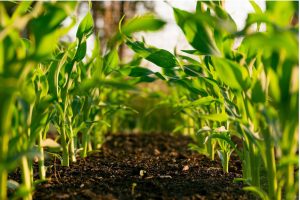 Canadian government programs increasingly support conservation practices and climate-smart agriculture. These aren’t handouts – they’re designed to incentivize land improvements that benefit everyone. If your farm operator knows how to access these programs, you’re essentially getting subsidized capital improvements.
For families serious about intergenerational ownership, this is also about legacy. Your grandchildren won’t thank you for inheriting depleted farmland. But a property with documented soil health improvements and sustainable water practices? That’s an asset they can actually work with.
The families we see doing this well treat sustainability as operational excellence, not philanthropy. Because that’s what it is.
Technology: Use It, Don’t Worship It
Precision farming. AI analytics. Satellite monitoring. Drone imagery.
The agtech pitch is seductive, but here’s the reality: technology is a tool, not a strategy.
For family offices owning farmland directly, your technology adoption should be pragmatic and operator-driven. If your tenant farmer wants to use precision GPS for variable-rate fertilizer application because it cuts input costs and improves yields, great. If some vendor is selling you a $50,000 AI platform to optimize planting schedules, probably not.
The best technology investments are the ones that reduce risk and improve decision-making without adding complexity. Soil sensors that catch drainage problems early. Weather data that helps time field operations. Remote monitoring that lets you see what’s actually happening on your property without driving three hours.
When combined with an experienced operator who understands the land, targeted tech adoption makes sense. When it’s a substitute for good farming, it doesn’t.
Why Family Offices Are Buying Farmland Directly
The institutional fund model is losing favor. Fast.
We’re seeing more family offices walk away from pooled farmland funds entirely – and it’s not hard to understand why. Fund structures mean layered fees, limited transparency, and investment committees that move at glacial speed. When a prime 500-acre property comes on the market, you can’t wait three months for committee approval.
Direct ownership solves this. You own the land, you make the decisions, and the economics are refreshingly simple: lease income plus land appreciation, minus your actual costs. No performance fees. No carried interest eating into returns.
But here’s what makes direct ownership work in practice: the right farm operator and the right lease structure. A skilled tenant farmer on a well-structured lease can generate 3-4% annual cash yield while maintaining – or improving – your soil quality. In strong crop years, profit-sharing arrangements can push that higher. In tough years, you’re not dealing with fund redemption requests or angry co-investors.
The challenge? You need someone on the ground who actually knows the difference between a good operator and one who’ll mine your soil for short-term gain.
That’s where local management becomes non-negotiable. Not a portfolio manager in Toronto reviewing quarterly reports – someone who can drive to your property, walk the fields with your tenant, and spot problems before they become expensive. Someone who knows that a neighboring farm might come available before it’s ever listed. Someone who can tell you what fair market rent actually is in that specific township, not what some province-wide average suggests.
This local intelligence creates a compounding advantage. You get better operators. Better lease terms. Earlier access to acquisitions. And you avoid the disasters – the problem tenants, the overpriced land, the environmental issues that only become obvious when you’re physically there.
For family offices planning to hold land for decades, this model just makes sense. You’re building a direct relationship with a tangible asset in a specific place, not buying shares in someone else’s diversified strategy.
The families doing this well aren’t trying to manage everything themselves. They’re partnering with people who live and breathe Canadian agriculture – who can handle the complexity while preserving the control that makes direct ownership worthwhile in the first place.
Farmland as an Intergenerational Asset
Here’s where farmland separates itself from almost every other alternative investment: it actually makes sense to pass down to your kids.
Try explaining your private equity portfolio to the next generation. Or your venture capital commitments. Or that distressed debt fund you got into in 2019. Good luck.
Farmland? “We own 400 acres of productive agricultural land in Ontario that’s been operated by the same family for 15 years. It generates income, appreciates steadily, and feeds people.” That’s a story that works across generations.
The governance is straightforward. You can structure ownership through family trusts, holding companies, or partnerships – whatever matches your existing family governance framework. The asset itself doesn’t require constant reallocation or active trading. You’re not trying to time exits or manage vintage year exposure.
And critically, you can separate ownership from operations. Your family owns the land. A professional farmer works it under a long-term lease. This means continuity across generations without requiring your children to become farmers. They need to understand the asset and maintain good relationships with operators, but they don’t need to know how to run a combine.
From a wealth transfer perspective, farmland has real advantages. Stable valuations. Predictable income. A tangible underlying asset that’s easy to explain and value. Compare that to trying to transfer interests in a complex fund structure with uncertain exit timing.
Many families also view farmland through a stewardship lens – it’s not just a financial asset, it’s a responsibility. Sustainable land management, conservation practices, responsible tenancy. These values resonate across generations in ways that maximizing IRR on a buyout fund doesn’t.
The durability matters too. Farmland has survived every financial crisis, every recession, every market panic of the past century. It produces food regardless of what’s happening in equity markets. That’s not correlation diversification – that’s fundamental resilience.
What This Means for Family Offices in 2026
Canadian farmland offers something increasingly rare: a combination of real value, predictable income, and tangible ownership in a secure, transparent market.
The fundamentals are solid. Limited supply of quality land. Growing global food demand. Political stability. Strong property rights. Water security. These aren’t temporary factors – they’re structural advantages that compound over decades.
The shift to direct ownership makes even more sense now. Families can maintain control, reduce fees, access better opportunities, and build something that actually survives succession planning.
But doing this well requires local expertise. You need people on the ground who understand Canadian agriculture, know the regional markets, can identify quality operators, and will tell you when a deal doesn’t make sense.
FIAN works with family offices through the entire investment process – from identifying opportunities and structuring acquisitions to ongoing management and operator oversight. If you’re serious about Canadian farmland as a long-term holding, let’s have a conversation about what that actually looks like for your family.
Because the best farmland investments aren’t made in boardrooms. They’re made in the field, with people who know the difference between good land and great landhttps://fian.ca/resources_canadian_farmland_timberland/ – and who’ll still be there when your grandchildren inherit it.
2026, © FIAN Inc.
For additional information about Canadian Farmland, please refer to FIAN’s Resource page.
